

logologo
  • Home
  • Learning Programs
    • Short & Long Courses
    • Online Learning and Product Development
    • Knowledge Platforms
    • Advisory around Capacity Development (CapDev)
    • Training Calendar
  • Scholars & Youth Engagement
    • Degree Program
    • Non-degree Program
    • Scholarships
  • Home
  • Learning Programs
    • Short & Long Courses
    • Online Learning and Product Development
    • Knowledge Platforms
    • Advisory around Capacity Development (CapDev)
    • Training Calendar
  • Scholars & Youth Engagement
    • Degree Program
    • Non-degree Program
    • Scholarships
logologo
  • Home
  • Learning Programs
    • Short & Long Courses
    • Online Learning and Product Development
    • Knowledge Platforms
    • Advisory around Capacity Development (CapDev)
    • Training Calendar
  • Scholars & Youth Engagement
    • Degree Program
    • Non-degree Program
    • Scholarships
  • Home
  • Learning Programs
    • Short & Long Courses
    • Online Learning and Product Development
    • Knowledge Platforms
    • Advisory around Capacity Development (CapDev)
    • Training Calendar
  • Scholars & Youth Engagement
    • Degree Program
    • Non-degree Program
    • Scholarships
February 5, 2026 by irrieducation Technology Transfer 0 comments

Workshop on Impact Evaluation and Causal Inference (India)

Course Description

In an era of increasing complexity and resource constraints, policymakers and development practitioners must demonstrate the effectiveness of their interventions. Impact evaluation and causal inference are essential for assessing intended program outcomes and informing evidence-based decision-making.

This five-day workshop will provide participants with the tools and knowledge to rigorously evaluate the impact of interventions and guide evidence-based policy decisions. By utilizing practical applications and real-world examples, the workshop will bridge the gap between research and policy, fostering more effective and sustainable development outcomes.

Course Objectives

  • Understand the Need for Impact Evaluations: Highlight the importance of impact evaluations in assessing program effectiveness and informing policy decisions.
  • Explore Causal Inference Methods: Become familiar with experimental and quasi-experimental methods, such as randomized controlled trials (RCTs), difference-in-differences (DiD), instrumental variables (IV), and regression discontinuity designs (RDD), for estimating causal effects.
  • Apply Cost-Effectiveness Analysis: Conduct CEA to assess the economic efficiency of interventions to inform policymaking.
  • Promote Evidence-Based Policymaking: Emphasize the role of rigorous evidence in shaping effective and sustainable policies.

Expected Outcomes

By the end of the training course, the participants should be able to:

  • Understand the importance of impact evaluation and causal inference in development practice
  • Gain practical skills in designing and implementing RCTs and quasi-experimental methods
  • Learn how to conduct a cost-effectiveness analysis (CEA) to evaluate the economic efficiency of interventions
  • Integrate evidence-based approaches into policymaking and program design.

Key Modules:

  • Need for Impact Evaluations: Why impact evaluations are essential for assessing program effectiveness and ensuring accountability.
  • Randomized Controlled Trials (RCTs): The gold standard for causal inference, including design, randomization, and analysis.
  • Quasi-Experimental Methods:
    • Difference-in-Differences (DiD): Comparing changes over time between treatment and control groups.
    • Instrumental Variables (IV): Addressing endogeneity and selection bias.
    • Regression Discontinuity Designs (RDD): Leveraging cutoff points for causal inference.
  • Cost-Effectiveness Analysis (CEA): Evaluating the economic efficiency of interventions by comparing their costs and measurable impacts.
  • Evidence-Based Policymaking: Leveraging rigorous impact evaluations and CBA to inform policy decisions and enhance program design.

Learning Modality

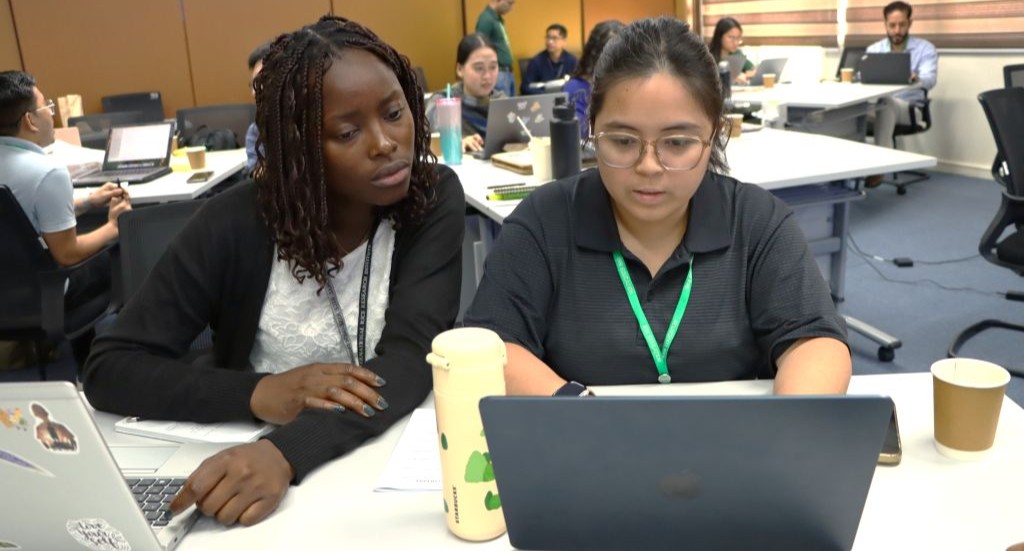
The course will be delivered face-to-face with a synchronous involving theoretical concepts, practical, and hands-on exercises.

Basic Requirements/Eligibility

Open to early-career researchers and practicing specialists with basic knowledge of research methods who have completed or are working on projects and seek to conduct impact analyses in agriculture, environment, or related fields.

Target Audience

This workshop is designed for policymakers, development practitioners, researchers, and students interested in impact evaluation, causal inference, and evidence-based policymaking.


Workshop on Impact Evaluation and Causal Inference (India)

Training Duration

Pre-Training Activity: 8 July 2026 | 2:00-4:00 PM Philippine Time via zoom

Training Duration: 13-17 July 2026 | Varanasi, Uttar Pradesh, India

Deadline of Application

15 May 2026

Course Fee

External participants with accommodation - USD 1570

The course fee applies to external and non-IRRI participants and includes the training kit, welcome and closing dinners, and daily snacks and lunch for the duration of the training.

In addition, participants are responsible for covering their transportation expenses (including airfare and airport transfers) to and from ISARC, as well as their own accommodation, medical insurance, and allowance.

IRRI Staff - USD 1379

The course fee applies to IRRI Staff from both Headquarters and Country Offices and covers the training kit, welcome and closing dinners, and daily snacks and lunch for the duration of the training.

In addition, participants are responsible for covering their transportation expenses (including airfare and airport transfers) to and from ISARC, as well as their accommodation and allowance, which should be charged to their respective bus codes.

Click here to apply!

Featured Resource Persons

Patrick S. Ward (Associate Professor, University of Florida)

Patrick S. Ward is an associate professor in the Food and Resource Economics Department at the University of Florida, where he focuses on the intersection of agricultural, environmental, and development economics. His research explores household behavioral responses to environmental risks and innovative financial solutions for sustainable farming. Previously, he served as faculty at Duke Kunshan University in Kunshan, Jiangsu Province, China, and as a Research Fellow at the International Food Policy Research Institute (IFPRI), both in the South Asia Regional Office in New Delhi, India, as well as the international headquarters in Washington, DC. His work spans applied microeconomics and econometrics, contributing to global food security and rural development. Ward is also an active and enthusiastic educator, teaching courses on quantitative methods and managerial economics. He holds a PhD in agricultural economics with a specialization in international development from Purdue University.

Valerien Pede (Senior Scientist II – Agricultural Economics)

Valerien Pede is a Senior Agricultural Economist at the International Rice Research Institute (IRRI), and he is currently Head of the Transformative Policies and Investments Unit. He received his PhD in Agricultural Economics from Purdue University in 2009 and MSc from the University of Arkansas in 2005. His research area includes: Applied spatial econometrics and regional analysis, impact evaluation of agricultural technologies, foresight and policy analysis, commodity price dynamics, climate change, food security, and poverty issues.

0
GHG Emissions in Rice Systems: Gas Chromatography Training for Accurate Measurement and AnalysisPrevious Post

SIGN UP FOR NEWSLETTER

Receive our latest updates

/* real people should not fill this in and expect good things - do not remove this or risk form bot signups */

CONTACTS

IRRI HQ Location:
Los Baños, Laguna 4031, Philippines
Phone: +63 2 8580 5600, +63 2 8845 0563;
ISARC Office Location:
NSRTC Campus, G. T. Road, Collectry Farm, P.O. Industrial Estate, Varanasi-221006, Uttar Pradesh, India
Phone: +91-0542-2518901, +91-0542-2518900
Email: irri-education@cgiar.org

KNOWLEDGE HUBS

IRRI
CGIAR
Openlearning
Rice Knowledge Bank
CGIAR’s Gender, Diversity and Inclusion Knowledge Hub

QUICK LINKS

  • About Us
  • News & Events
  • Guestbook
  • FAQs
  • Institutional CapDev Facilities

Engage with Us


IRRI-CGIAR logo

Privacy & CookiesLegal NoticeCreative Commons© 2022 IRRI Education. All Rights Reserved

  • Login
Forgot Password?
Lost your password? Please enter your username or email address. You will receive a link to create a new password via email.
body::-webkit-scrollbar { width: 7px; } body::-webkit-scrollbar-track { border-radius: 10px; background: #f0f0f0; } body::-webkit-scrollbar-thumb { border-radius: 50px; background: #dfdbdb }

    We would like to hear from you!