
logologo
  • Home
  • Learning Programs
    • Short & Long Courses
    • Online Learning and Product Development
    • Knowledge Platforms
    • Advisory around Capacity Development (CapDev)
    • Training Calendar
  • Scholars & Youth Engagement
    • Degree Program
    • Non-degree Program
    • Scholarships
  • Home
  • Learning Programs
    • Short & Long Courses
    • Online Learning and Product Development
    • Knowledge Platforms
    • Advisory around Capacity Development (CapDev)
    • Training Calendar
  • Scholars & Youth Engagement
    • Degree Program
    • Non-degree Program
    • Scholarships
logologo
  • Home
  • Learning Programs
    • Short & Long Courses
    • Online Learning and Product Development
    • Knowledge Platforms
    • Advisory around Capacity Development (CapDev)
    • Training Calendar
  • Scholars & Youth Engagement
    • Degree Program
    • Non-degree Program
    • Scholarships
  • Home
  • Learning Programs
    • Short & Long Courses
    • Online Learning and Product Development
    • Knowledge Platforms
    • Advisory around Capacity Development (CapDev)
    • Training Calendar
  • Scholars & Youth Engagement
    • Degree Program
    • Non-degree Program
    • Scholarships
August 19, 2026 by irrieducation Technology Transfer 0 comments

Training Course on Crop Residue Management for a Green Circular Economy

Course Description

Agricultural mechanization is central to improving productivity while addressing one of the biggest sustainability challenges in rice-based systems crop residue management. Open-field burning of crop residues contributes to greenhouse gas emissions, air pollution, nutrient loss, and declining soil health. At the same time, crop residues present significant opportunities for generating income through value-added products such as compost, mushroom substrate, biochar, livestock feed, and biomass energy. 

This three-day training program is designed to build practical capacity among student progressive farmers, machine operators, rural entrepreneurs, extension personnel, and technicians in the effective use of agricultural mechanization and sustainable crop residue management practices. The course integrates hands-on operational skills with repair and maintenance know-how, alongside emerging approaches for converting crop residues into economic and environmental opportunities under a green circular economy framework.  

Course Objectives

By the end of the training course, the participants should be able to:

  • Explain the principles of circular economy and sustainable crop residue management.
  • Operate and calibrate modern agricultural machinery for conservation agriculture including Smart Seeders, Super Seeders, and Happy Seeders.
  • Perform preventive and corrective maintenance, including lubrication, alignment, belt/chain adjustment, and troubleshooting common faults.
  • Learn about mechanized in situ residue management practices with Smart Seeder and Happy Seeder.
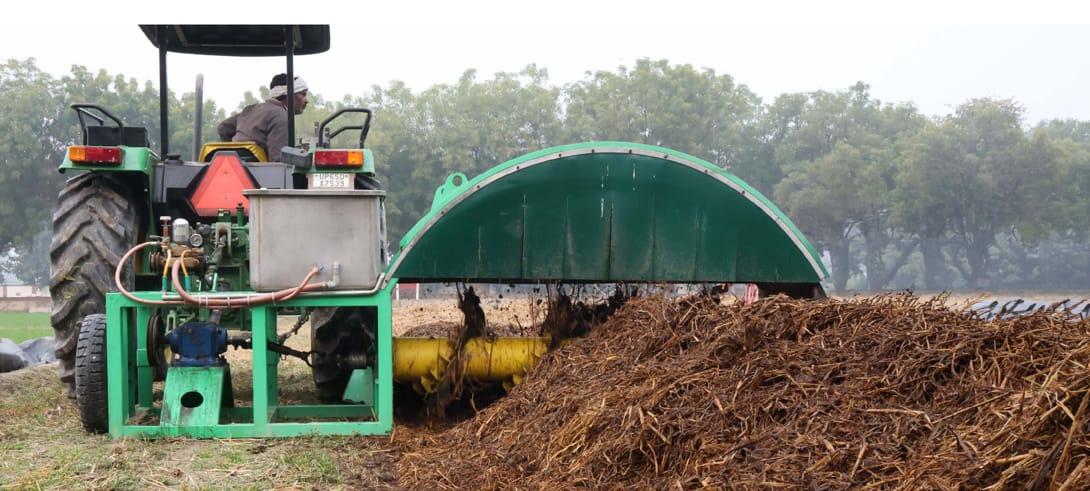
  • Implement ex situ residue utilization systems, including baling, mushroom substrate preparation, mechanized biochar production, portable biomass-based gen-set and composting using a compost turner.
  • Evaluate machine performance indicators such as field capacity, fuel consumption, operational cost, and residue management efficiency.
  • Evaluate the economic and environmental benefits of alternative residue management options.
  • Develop suitable mechanization strategies for different farming systems and service provider business models.

Learning Outcomes

After successfully completing the training, participants will be able to:

  • Operate major crop residue management machinery independently.
  • Diagnose and resolve common machinery problems.
  • Select appropriate residue management technologies based on farm conditions.
  • Calculate operational efficiency and economic returns of mechanized operations.
  • Identify business opportunities in residue-based enterprises.
  • Promote environmentally sustainable residue management practices within farming communities.

Key Modules:

  • Module 1: Conceptual Foundations of Circular Residue Management
  • Module 2: Ex-Situ Residue Management Technologies
  • Module 3: In-Situ Residue Management Technologies Hands-on Demonstration
  • Module 4. Machinery Maintenance and Troubleshooting
  • Module 5: Economic and Environmental Impact Assessment

Learning Modality

The course will be delivered face-to-face through activities involving classroom lectures, hands-on training, and lab visits.

Target Audience

  • Agricultural entrepreneurs
  • Farm machinery dealers
  • Machine operators
  • Agricultural engineers
  • Extension professionals
  • Krishi Vigyan Kendra (KVK) personnel
  • Progressive farmers
  • Custom Hiring Centre (CHC) operators
  • Farmer Producer Organizations (FPOs)
  • Agri-tech startups
  • Researchers and postgraduate students
  • Government officials working in agricultural mechanization
Training Course on Crop Residue Management for a Green Circular Economy

Training Duration

Pre-Training Activity: 23 October 2026 | 2:30-3:30 PM Indian Time via zoom

Training Duration: 28-30 October 2026 | International Rice Research Institute – South Asia Regional Centre (ISARC), Varanasi, Uttar Pradesh, India

Deadline of Application

30 September 2026

Course Fee

External participants - USD 327

The course fee applies to external and non-IRRI participants and includes the training kit, daily pick-up and drop from ISARC to the point of stay, daily snacks, and lunch for the duration of the training.

In addition, participants are responsible for covering their accommodation, transportation expenses (including airfare and airport transfers), as well as their own medical insurance, and allowance.

IRRI Staff - USD 294

The course fee applies to IRRI Staff from both Headquarters and Country Offices and covers the training kit, and daily snacks and lunch, daily pick-up and drop from ISARC to the point of stay for the duration of the training.

In addition, participants are responsible for covering their accommodation, transportation expenses (including airfare and airport transfers), and allowance which should be charged to their respective bus codes.

Click here to apply!

Featured Resource Persons

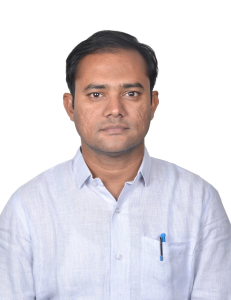
Dr. Suryakanta Khandai (Postdoctoral Fellow – Mechanization and Postharvest, ISARC, Varanasi)

Dr. Suryakanta Khandai holds a Ph.D. in Farm Machinery & Power Engineering and brings over 13 years of experience at IRRI in mechanization and postharvest R&D. He has authored 36 research papers, holds two patents, contributed to books and chapters, and maintains an H‑index of 9. A recipient of multiple honors—including the Young Agriculture Engineer Award (2025), Scientist of the Year (2022), and Young Scientist Award (2021), he is recognized for advancing agricultural engineering and mechanization. Dr. Khandai leads postharvest initiatives for IRRI India, co‑led an ICAR–IRRI project and played a key role in establishing ISARC’s mechanization hub and field dissemination ecosystem. His work spans farm mechanization, sustainable intensification, postharvest technologies, and large‑scale development programs supported by the World Bank and USAID, contributing to the empowerment of service providers and strengthening of CHCs across South Asia. 

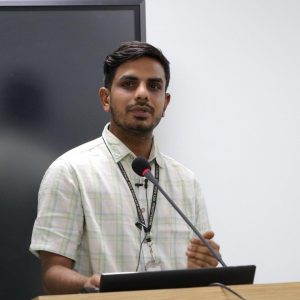
Dr. Sandip Mandal (Senior Scientist at ICAR – Central Institute of Agricultural Engineering (CIAE), Bhopal)

Dr. Sandip Mandal is a Senior Scientist at ICAR–Central Institute of Agricultural Engineering (CIAE), Bhopal, working in the Agricultural Energy and Power Division. He has been associated with the Indian Council of Agricultural Research (ICAR) for more than 17 years, contributing to agricultural engineering research and technology development. He obtained his M.Tech. and Ph.D. degrees from Govind Ballabh Pant University of Agriculture and Technology (GBPUAT), Pantnagar. 

His research expertise includes renewable energy, biomass conversion, biochar production, gasification, pyrolysis, green hydrogen, and agricultural waste utilization. He has made significant contributions to the development of sustainable technologies for converting agricultural residues into energy, biochar, and other value-added products. His research work encompasses catalytic methane pyrolysis, hydrogen production, biomass gasification, pyrolysis, and biomass densification technologies. 

Dr. Mandal has published more than 50 research papers in peer-reviewed national and international journals. He has also contributed to patents, technology development, training programmes, technology demonstrations, and capacity-building activities in the field of agricultural energy.

Dr. Dilwar Singh Parihar (Mechanization Specialist – ISARC, Varanasi)

Dr. Dilwar Singh Parihar holds a Ph.D. in Agricultural Engineering from Punjab Agricultural University, specializing in mechanization, residue management, and conservation agriculture. With years of research and development experience, the work focuses on advancing sustainable and efficient farming systems. Currently serving as Specialist – Postharvest and Rice Value Chain at the International Rice Research Institute (IRRI) in Varanasi, the role involves strengthening institutional and industry collaborations to drive innovations in rice-based production systems. The professional has strong expertise in designing, evaluating, and promoting mechanized solutions aimed at enhancing agricultural productivity, efficiency, and environmental sustainability across diverse farming contexts. 

0
Quality Seed Production Training Course (Africa)Previous Post
AI-Enabled Models for Intelligent Plant BreedingNext Post

SIGN UP FOR NEWSLETTER

Receive our latest updates

/* real people should not fill this in and expect good things - do not remove this or risk form bot signups */

CONTACTS

IRRI HQ Location:
Los Baños, Laguna 4031, Philippines
Phone: +63 2 8580 5600, +63 2 8845 0563;
ISARC Office Location:
NSRTC Campus, G. T. Road, Collectry Farm, P.O. Industrial Estate, Varanasi-221006, Uttar Pradesh, India
Phone: +91-0542-2518901, +91-0542-2518900
Email: irri-education@cgiar.org

KNOWLEDGE HUBS

IRRI
CGIAR
Openlearning
Rice Knowledge Bank
CGIAR’s Gender, Diversity and Inclusion Knowledge Hub

QUICK LINKS

  • About Us
  • News & Events
  • Guestbook
  • FAQs
  • Institutional CapDev Facilities

Engage with Us


IRRI-CGIAR logo

Privacy & CookiesLegal NoticeCreative Commons© 2022 IRRI Education. All Rights Reserved

  • Login
Forgot Password?
Lost your password? Please enter your username or email address. You will receive a link to create a new password via email.
Please enter a new password
body::-webkit-scrollbar { width: 7px; } body::-webkit-scrollbar-track { border-radius: 10px; background: #f0f0f0; } body::-webkit-scrollbar-thumb { border-radius: 50px; background: #dfdbdb }

    We would like to hear from you!