
logologo
  • Home
  • Learning Programs
    • Short & Long Courses
    • Online Learning and Product Development
    • Knowledge Platforms
    • Advisory around Capacity Development (CapDev)
    • Training Calendar
  • Scholars & Youth Engagement
    • Degree Program
    • Non-degree Program
    • Scholarships
  • Home
  • Learning Programs
    • Short & Long Courses
    • Online Learning and Product Development
    • Knowledge Platforms
    • Advisory around Capacity Development (CapDev)
    • Training Calendar
  • Scholars & Youth Engagement
    • Degree Program
    • Non-degree Program
    • Scholarships
logologo
  • Home
  • Learning Programs
    • Short & Long Courses
    • Online Learning and Product Development
    • Knowledge Platforms
    • Advisory around Capacity Development (CapDev)
    • Training Calendar
  • Scholars & Youth Engagement
    • Degree Program
    • Non-degree Program
    • Scholarships
  • Home
  • Learning Programs
    • Short & Long Courses
    • Online Learning and Product Development
    • Knowledge Platforms
    • Advisory around Capacity Development (CapDev)
    • Training Calendar
  • Scholars & Youth Engagement
    • Degree Program
    • Non-degree Program
    • Scholarships
July 30, 2026 by irrieducation News & Events 0 comments

Advancing Evidence-Based Policymaking Through Impact Evaluation

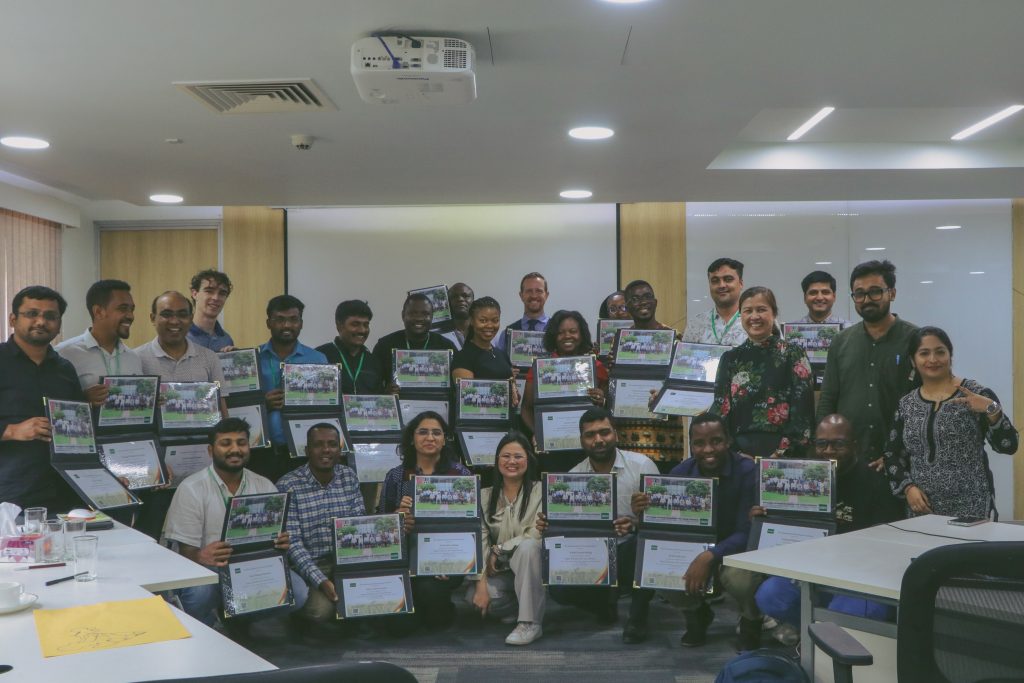
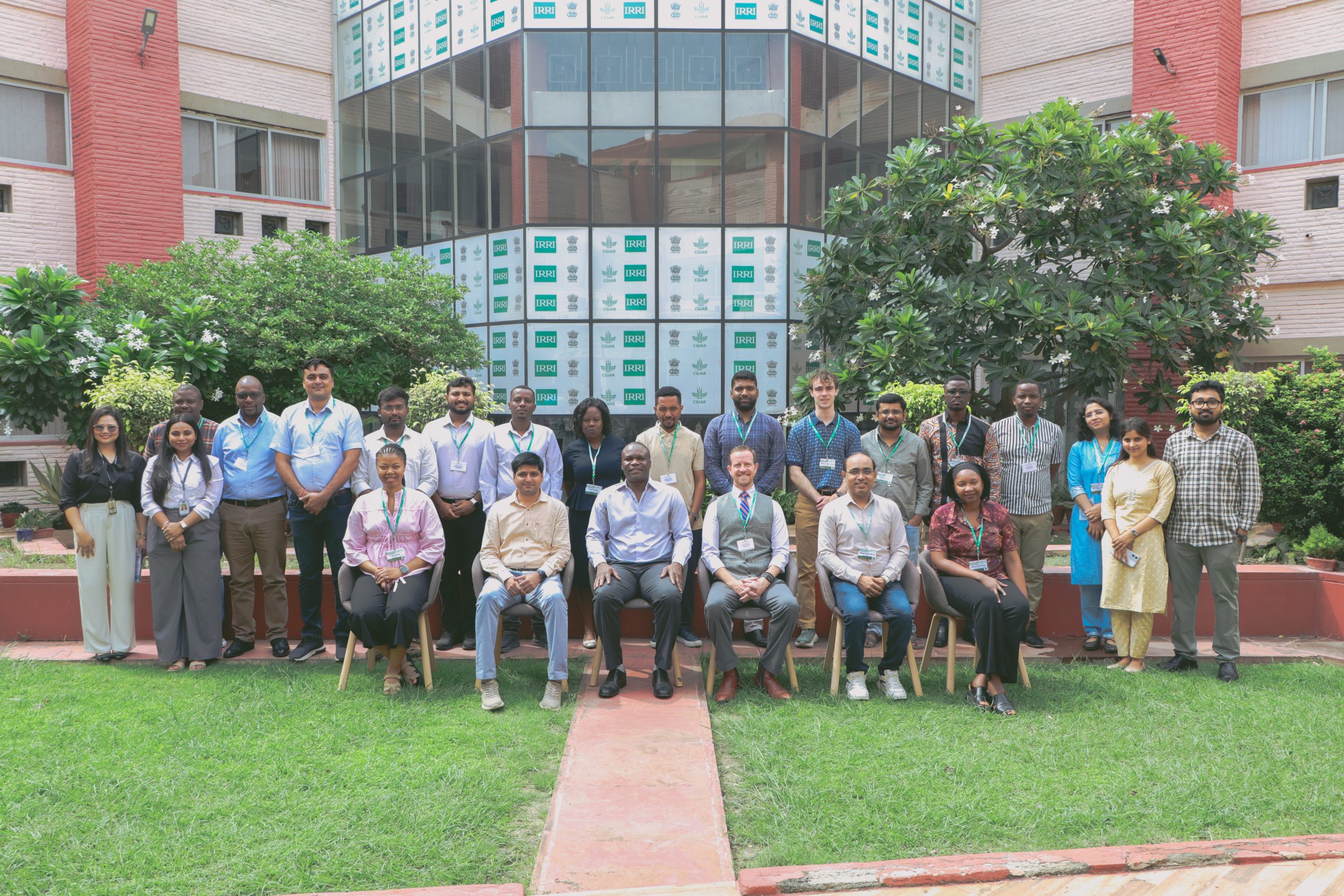
VARANASI, India – In a world where development investments are increasingly expected to deliver measurable results, the ability to generate credible evidence has become a cornerstone of effective policymaking. To help researchers and practitioners meet this growing demand, IRRI Education successfully conducted the Workshop on Impact Evaluation and Causal Inference from 13–17 July 2026 at the IRRI South Asia Regional Centre (ISARC) in Varanasi, India. 

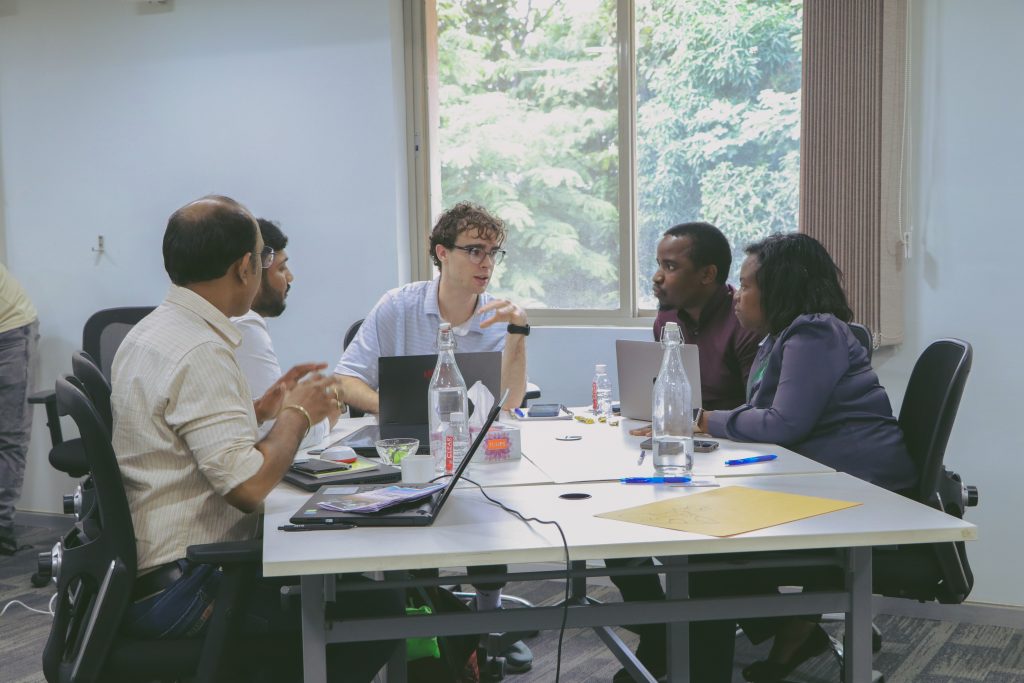
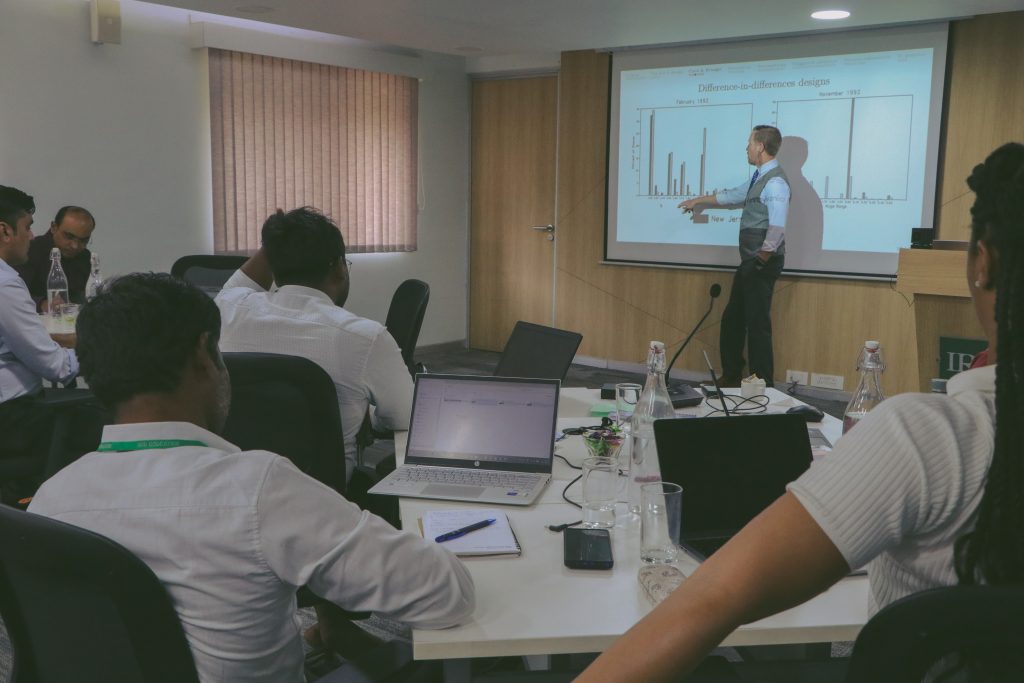
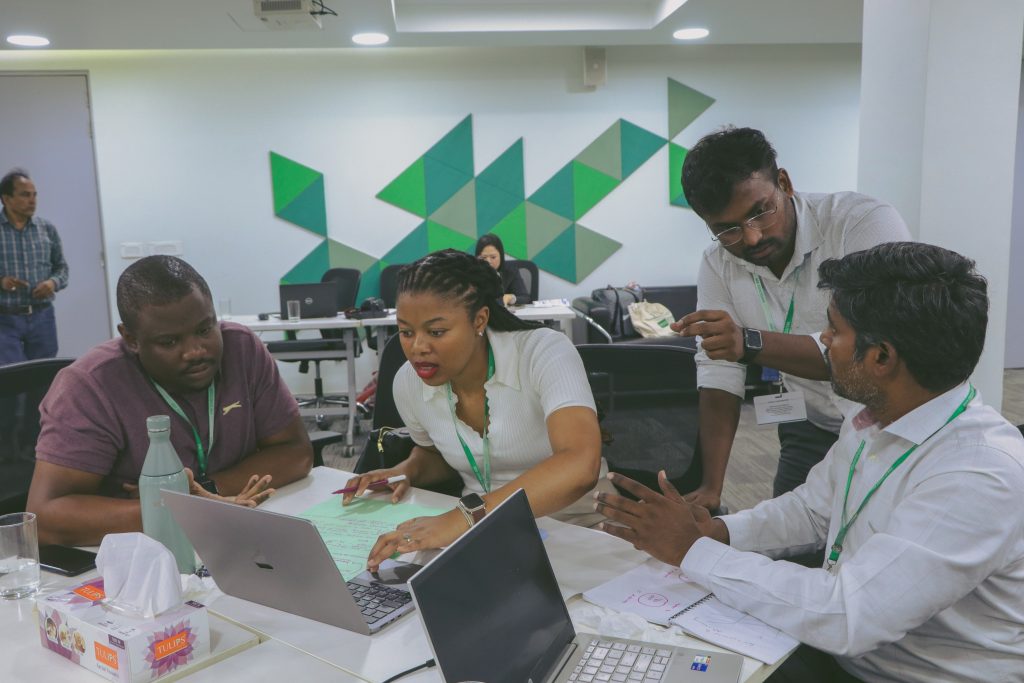
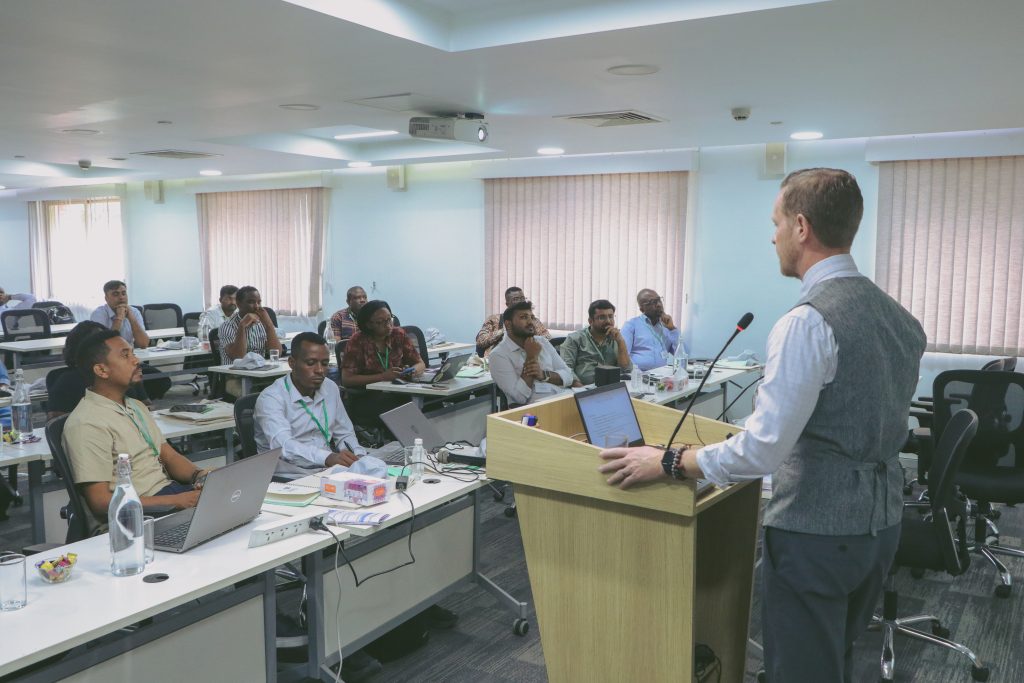
The five-day workshop brought together 18 researchers, policymakers, and development practitioners from Asia, Africa, and North America to strengthen their capacity in evaluating development interventions using rigorous scientific methods. The training was led by Dr. Patrick Ward, Associate Professor in the Food and Resource Economics Department at the University of Florida, and Dr. Valerian Pede, Senior Agricultural Economist at the International Rice Research Institute (IRRI) and the Head of the Transformative Policies and Investments Unit, with Dr. Vikram Patil, Scientist – Agricultural Economics at IRRI, also serving as a resource person. The workshop equipped participants with practical tools to generate credible evidence that can inform policies, improve development programs, and maximize the impact of investments in agriculture and related sectors. 

Participants represented a diverse range of institutions, including the International Rice Research Institute (IRRI), ICAR–Indian Agricultural Research Institute (IARI), Kenya Agricultural and Livestock Research Organization (KALRO), Ethiopian Institute of Agricultural Research (EIAR), Council for Scientific and Industrial Research (Ghana), International Potato Center (CIP), Alliance of Bioversity International, University of Arkansas, University of KwaZulu-Natal, Lancet Countdown Africa, and other partner organizations. 
Building Capacity for Evidence-Based Policymaking 

As governments and development organizations face increasingly complex challenges—from food security and climate resilience to resource allocation—understanding what works, why it works, and for whom has become more prominent than ever. 

Throughout the workshop, participants explored the principles of impact evaluation and causal inference through a balance of theoretical discussions and practical applications. Sessions covered randomized controlled trials (RCTs), difference-in-differences (DiD), instrumental variables (IV), regression discontinuity designs (RDD), cost-effectiveness analysis, and evidence-based policymaking, enabling participants to critically assess the effectiveness of programs and interventions. 

Rather than focusing solely on statistical methods, the workshop emphasized how rigorous evaluation can bridge the gap between research and policy, ensuring that decisions are grounded in reliable evidence and lead to more effective and sustainable development outcomes.

A Learning Environment Designed for Everyone 

One of the workshop’s defining strengths was its highly interactive and learner-centered approach. 

Participants consistently commended Dr. Patrick Ward for making technically challenging concepts accessible to learners with varying levels of experience in R programming. Through hands-on exercises, real-world examples, and personalized guidance, he created an inclusive learning environment where both beginners and experienced researchers could confidently participate. 

Many participants noted that they not only gained a better understanding of impact evaluation methods but also left with the confidence to continue using R independently through the learning materials and resources shared during the workshop. 

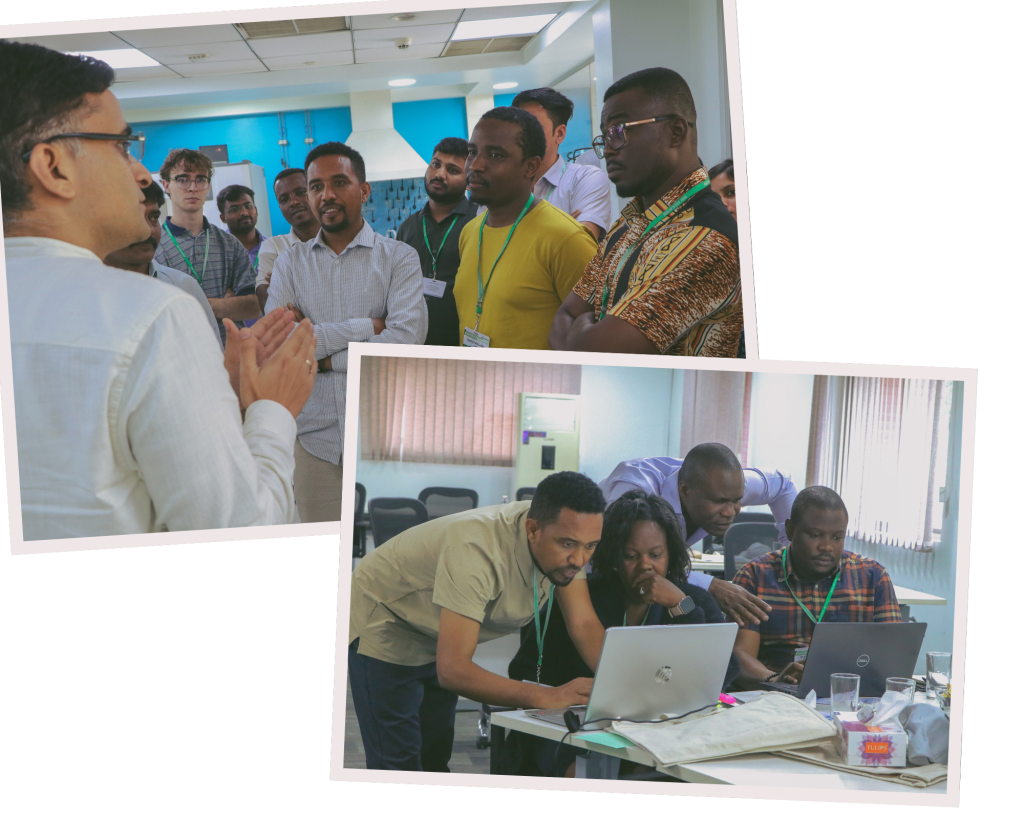
The engaging format encouraged participants to ask questions, collaborate with peers, and immediately apply newly learned concepts to practical scenarios—making the learning experience both relevant and highly applicable to their professional work. 


Transforming Perspectives on Impact Evaluation 

Beyond strengthening technical competencies, the workshop reshaped how participants viewed impact evaluation and its role in research and development. 

Several participants shared that they now “feel confident for designing Impact Study,” while others described becoming “more confident about the concepts, methods selection & implementation.“ 

For many, the workshop also challenged previous assumptions. 

One participant reflected that “this is not as hard and as complicated as I thought,” while another remarked that their “perception towards impact assessment has changed.” 

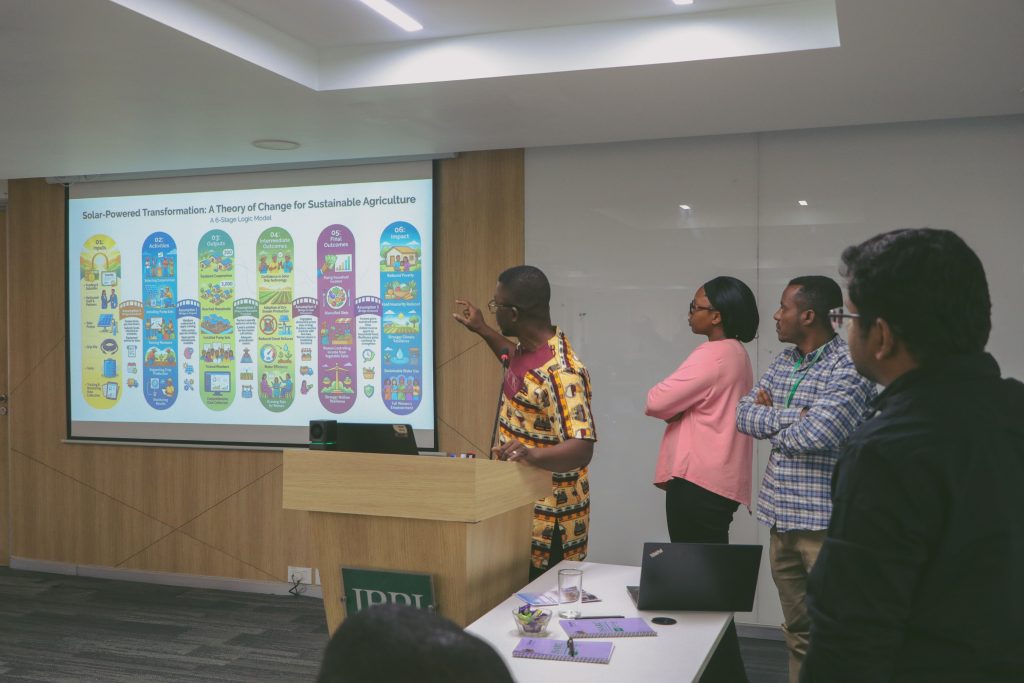
Others highlighted how the training reinforced the importance of rigorous research design. One participant explained that before attending the workshop, they had not considered the importance of developing a theory of change in impact evaluation. After the training, they realized that without a theory of change, impact assessment results could be biased, fundamentally changing how they plan to evaluate future programs. 

Participants also reported greater confidence in collaborating with international researchers, increased commitment to evidence-based research, and a renewed appreciation for applying rigorous evaluation methods in addressing real-world development challenges. 


Learning That Extends Beyond the Classroom 

The workshop’s impact was reflected in the participants’ own words. 

“This is the most useful course that I have added in the recent past and quite applicable to my area of work.” 

Another participant emphasized how the workshop effectively combined theory with practice. 

“This training on impact evaluation and causal inference greatly expanded my knowledge of methods that can be used to inform policy making. The introduction to practical application grounded in theoretical knowledge was especially helpful as someone new to this type of research.” 

For participants already familiar with some evaluation approaches, the workshop deepened their understanding and broadened their methodological toolkit. 

“Though I have used DiD method earlier, after the training I am satisfied and have the confidence of using more quasi-experimental designs in my research work.” 

The workshop also fostered valuable professional connections among participants from different countries and institutions, creating opportunities for future collaborations that extend beyond the duration of the training. 

One participant described the experience as: 

“An exceptional learning experience that exceeded my expectations. The program was well structured, highly interactive, and combined strong theoretical foundations with practical applications that I can readily apply in my research and professional work.”

Strengthening Collaboration Through the IRRI-ICAR Partnership 

The workshop also reflected the strong and growing collaboration between IRRI and the Indian Council of Agricultural Research (ICAR) in advancing research capacity and evidence-based agricultural development. Under the current IRRI-ICAR Collaboration, participants nominated by Indian Council of Agricultural Research (ICAR) joined the workshop, further strengthening institutional collaboration and knowledge exchange between the two organizations. 

For the ICAR-nominated participants, the training strengthened both technical skills and confidence in bringing rigorous evaluation methods back to their institutions. 

One participant shared, 

“Wonderful course, excellent resource person.” 

Another participant from ICAR-IARI reflected on how the experience reinforced ties to their home institution and opened the door to future collaboration: 

“I joined this training program with great enthusiasm, encouraged by my Head of Division… I am grateful to my institution for selecting me, I am confident in using more quasi-experimental designs, such as DiD, in my research work and I look forward to building on the relationships I’ve formed with fellow participants and resource faculty for future collaboration.” 

For the ICAR-nominated participants, the training was as much about the people in the room as the methods on the whiteboard. Working alongside researchers from Africa, and North America, gave them a firsthand look at how evaluation challenges play out in very different agricultural and policy contexts, while sharpening their own technical grounding in impact evaluation and causal inference.

Expanding Opportunities Through the Capacity Sharing Accelerator

The workshop also underscored the value of partnerships in strengthening research capacity across the Global South. Several participants expressed their appreciation to the Capacity Sharing Accelerator (CapSha) of CGIAR, whose support enabled them to participate in the training and engage with fellow researchers from diverse institutions and countries. 

For many, the opportunity extended far beyond attending a technical workshop—it opened doors to new knowledge, professional networks, and future collaborations. 

One participant shared, 

“It’s been an insightful workshop that unpacks the importance of causal inference and rigorous evidence generation for policy impact evaluation. Thank you to the Capacity Sharing (CAPSha) for sponsoring my attendance to the workshop.” 

Another participant reflected on how the sponsorship made a meaningful difference in their professional development, saying, 

“This course was an exceptional learning experience that exceeded my expectations. The program was well structured, highly interactive, and combined strong theoretical foundations with practical applications that I can readily apply in my research and professional work. I would like to express my sincere appreciation to IRRI and the people of India for their warm hospitality… My heartfelt thanks also go to CapSha for generously sponsoring my participation, making it possible for me to benefit from this valuable opportunity.” 

Beyond supporting participation, CapSha’s support in capacity development enabled researchers and practitioners to gain practical skills, exchange experiences across disciplines and countries, and build professional relationships that can foster future collaboration in advancing evidence-based agricultural research and development. 

Strengthening the Future of Evidence-Informed Development 

The true measure of this workshop lies not in the five days spent in the classroom, but in the decisions, policies, and innovations that participants will shape long after they return home. 

By investing in the people behind research and development, IRRI Education continues to champion evidence-informed solutions that address the world’s most pressing agricultural challenges. The call is clear: build stronger evidence, make better decisions, and create lasting impacts where it matters most—in the lives of farmers and the future of global food systems. 

Interested in similar training opportunities? Visit education.irri.org to learn more or email us at irri-education@cgiar.org.

agricultural development capacity building IRRI training
3
Building Nationwide IPM Champions: IRRI Conducts Hands-on Training course for DA-ATI Regional StaffPrevious Post

SIGN UP FOR NEWSLETTER

Receive our latest updates

/* real people should not fill this in and expect good things - do not remove this or risk form bot signups */

CONTACTS

IRRI HQ Location:
Los Baños, Laguna 4031, Philippines
Phone: +63 2 8580 5600, +63 2 8845 0563;
ISARC Office Location:
NSRTC Campus, G. T. Road, Collectry Farm, P.O. Industrial Estate, Varanasi-221006, Uttar Pradesh, India
Phone: +91-0542-2518901, +91-0542-2518900
Email: irri-education@cgiar.org

KNOWLEDGE HUBS

IRRI
CGIAR
Openlearning
Rice Knowledge Bank
CGIAR’s Gender, Diversity and Inclusion Knowledge Hub

QUICK LINKS

  • About Us
  • News & Events
  • Guestbook
  • FAQs
  • Institutional CapDev Facilities

Engage with Us


IRRI-CGIAR logo

Privacy & CookiesLegal NoticeCreative Commons© 2022 IRRI Education. All Rights Reserved

  • Login
Forgot Password?
Lost your password? Please enter your username or email address. You will receive a link to create a new password via email.
Please enter a new password
body::-webkit-scrollbar { width: 7px; } body::-webkit-scrollbar-track { border-radius: 10px; background: #f0f0f0; } body::-webkit-scrollbar-thumb { border-radius: 50px; background: #dfdbdb }

    We would like to hear from you!