

Varanasi, India — The International Rice Research Institute (IRRI) launched a five-day national training program on greenhouse gas (GHG) emissions in rice-based systems at its South Asia Regional Centre (ISARC) in Varanasi on 17–21 November 2025. The program aims to strengthen national capacity in accurately measuring methane emissions and identifying climate-smart mitigation strategies for rice cultivation.
ISARC Hosts National Training on GHG Measurement to Advance Climate-Smart Rice Systems
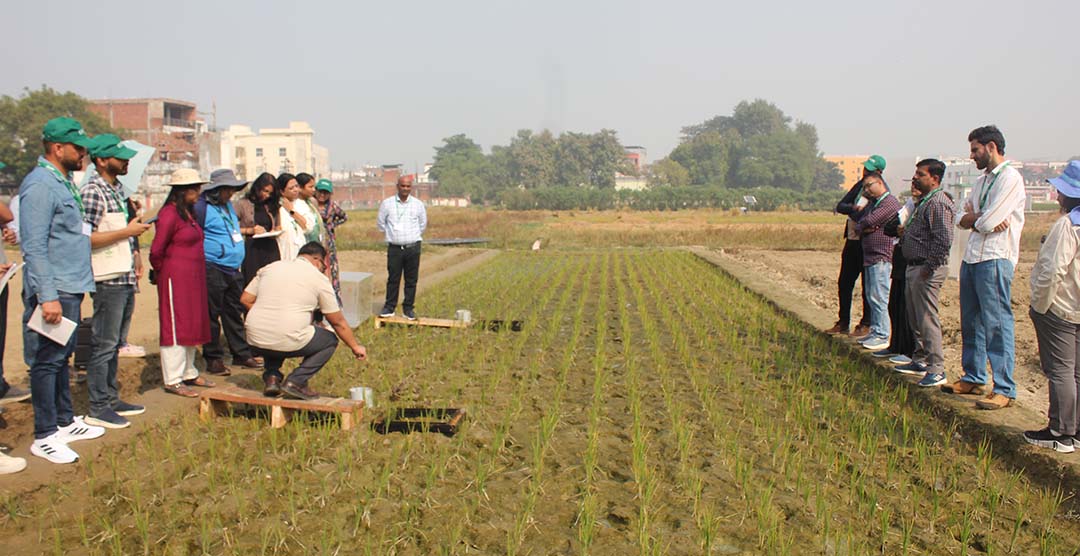
Rice fields in South and Southeast Asia account for more than half of total national methane emissions, making precise monitoring essential for achieving climate targets. The training, “Greenhouse Gas Emissions in Rice Systems: Procedures and Measurement Standards,” equips participants with practical skills in field gas sampling, laboratory analysis, data evaluation, and emission calculations.
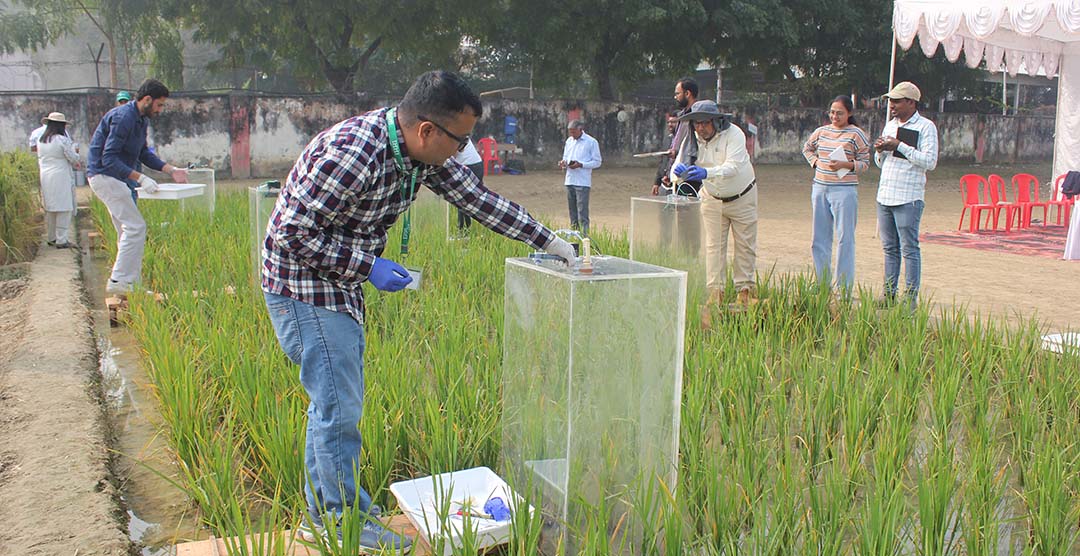
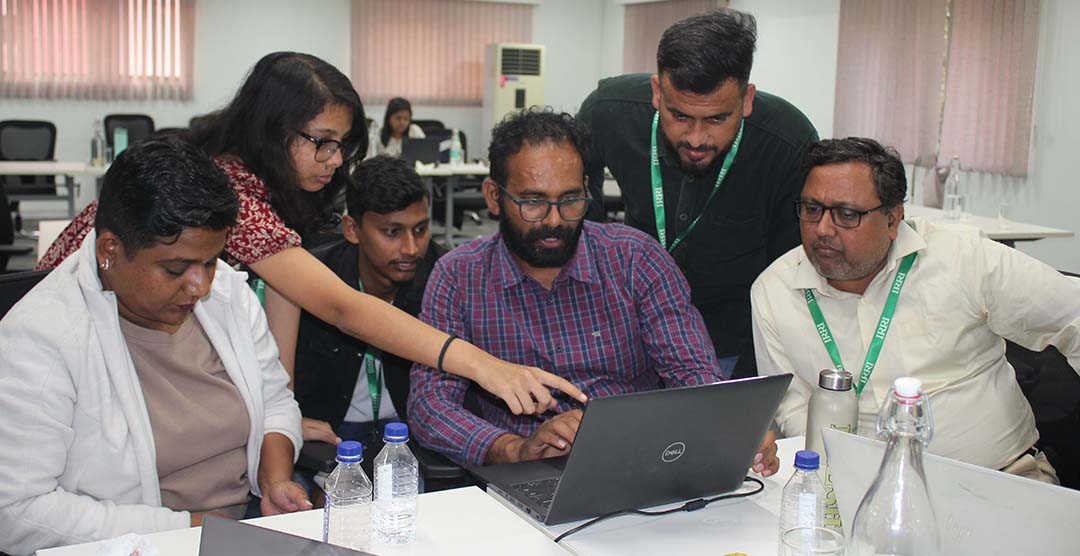
The course covers key learning areas including climate change impacts on rice production, mechanisms of GHG emissions in rice systems, IPCC-aligned inventory methods, alternate wetting and drying (AWD) mitigation practices, field setup and sampling protocols, laboratory analysis procedures, and country-specific case studies. Hands-on sessions guide participants through step-by-step measurement and reporting processes based on IRRI’s established research methodologies.
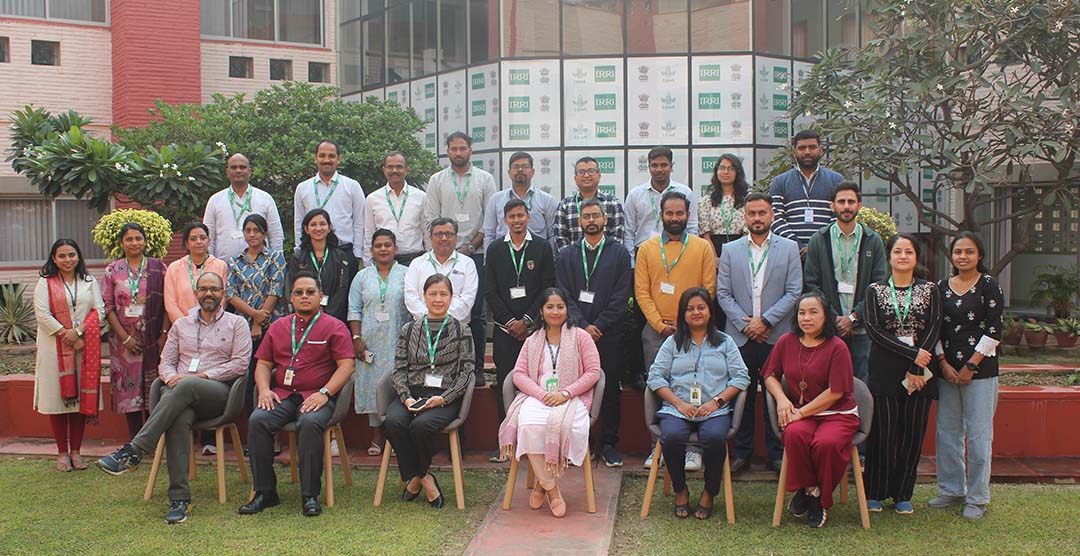
Participants represent a broad mix of public and private institutions, non-governmental organizations, and NARES partners. Institutions include the Indian Institute of Rice Research (IIRR), Kerala Agricultural University, Chaudhary Sarwan Kumar Himachal Pradesh Agricultural University, Punjab Agricultural University, Rallis India Limited, Eco Agripreneurs Pvt. Ltd., The Nature Conservancy, and RestoreEarth Solutions.
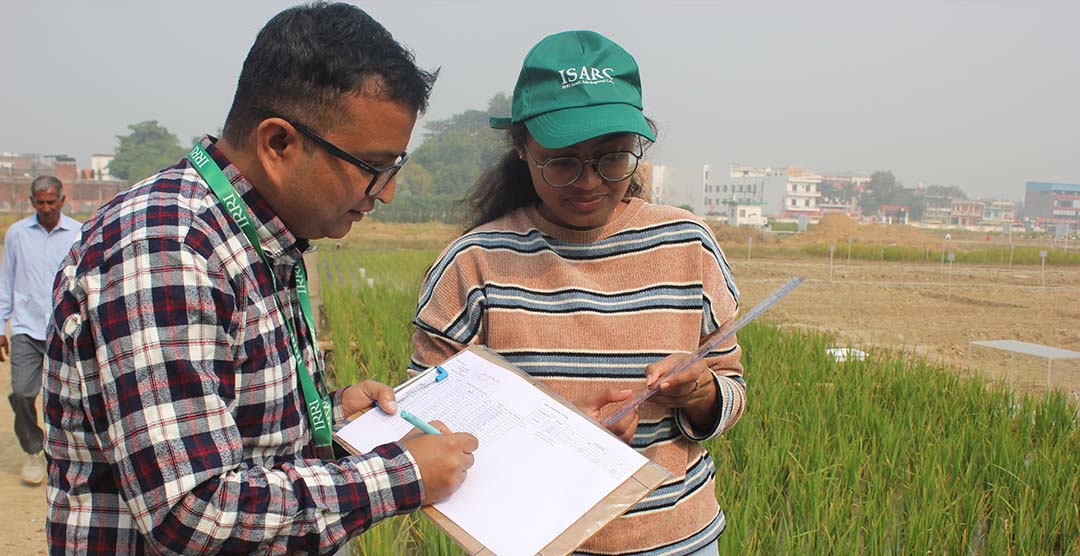
The training opened on 17 November with remarks from Dr. Anilyn D. Mannings, Head of IRRI Education, who welcomed participants, and Dr. Anthony Fulford, Soil Scientist, who addressed attendees on behalf of ISARC. Dr. Ando Radanielson, Senior Scientist and Environment and Climate Change Specialist, presented the course framework.
ISARC Director Dr. Sudhanshu Singh underscored the significance of evidence-based strategies for reducing GHG emissions in rice systems. “South Asia must lead with scientific approaches that reduce emissions while maintaining productivity. This program is a timely and impactful initiative in that direction,” he said.
IRRI Research Director Dr. Virendra Kumar, who inaugurated the program, emphasized the importance of building a collaborative community of scientists, researchers, and policymakers capable of accelerating climate action through rice-based systems.
Dr. Pratap Bhattacharya, Head of the Crop Production Division, ICAR–Central Rice Research Institute, highlighted the global importance of accurate GHG monitoring. “Scientific precision in GHG measurements is essential for shaping effective agricultural policies and mitigation strategies, not only for India but worldwide,” he stated.
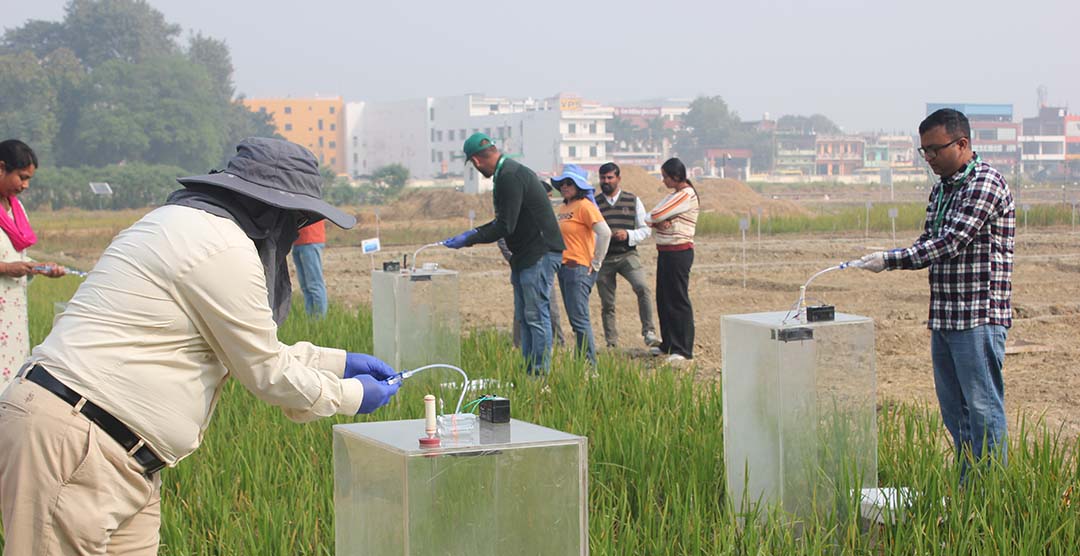
Throughout the week, participants engaged in field demonstrations, laboratory work, and data interpretation exercises designed to strengthen their capacity to support national climate goals. The program reinforces IRRI and ISARC’s commitment to advancing climate-smart agriculture through rigorous research, accurate measurement, and strong institutional partnerships.
Interested in similar training opportunities? Visit education.irri.org to learn more or email us at irri-education@cgiar.org.