
logologo
  • Home
  • Learning Programs
    • Short & Long Courses
    • Online Learning and Product Development
    • Knowledge Platforms
    • Advisory around Capacity Development (CapDev)
    • Training Calendar
  • Scholars & Youth Engagement
    • Degree Program
    • Non-degree Program
    • Scholarships
October 27, 2026 by irrieducation News & Events 0 comments

Rice researchers turn hands-on training into action against pests and diseases

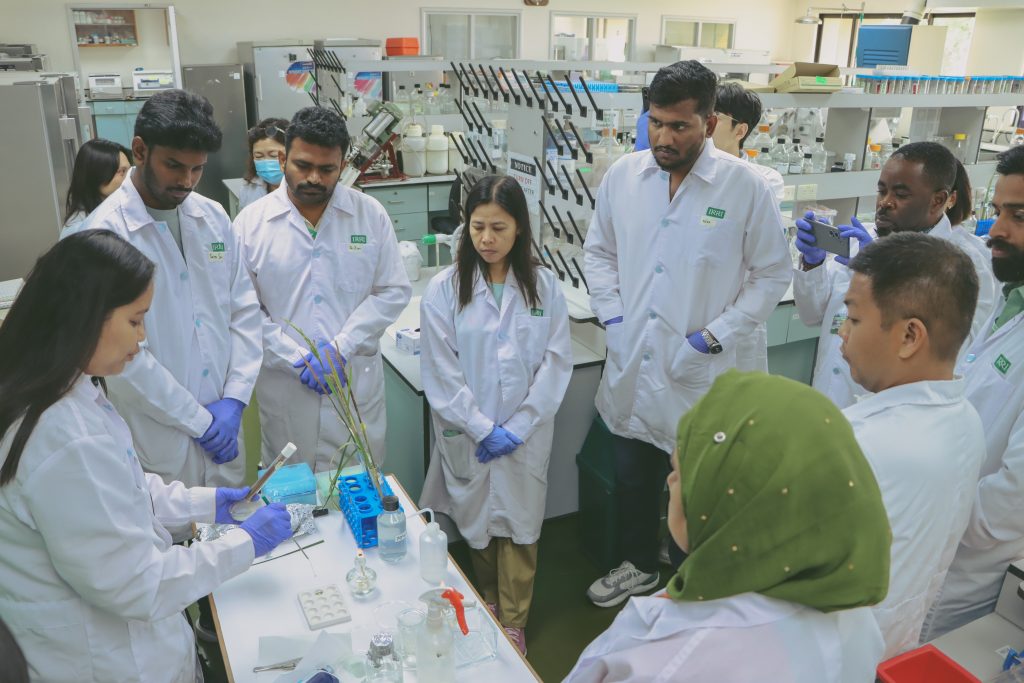
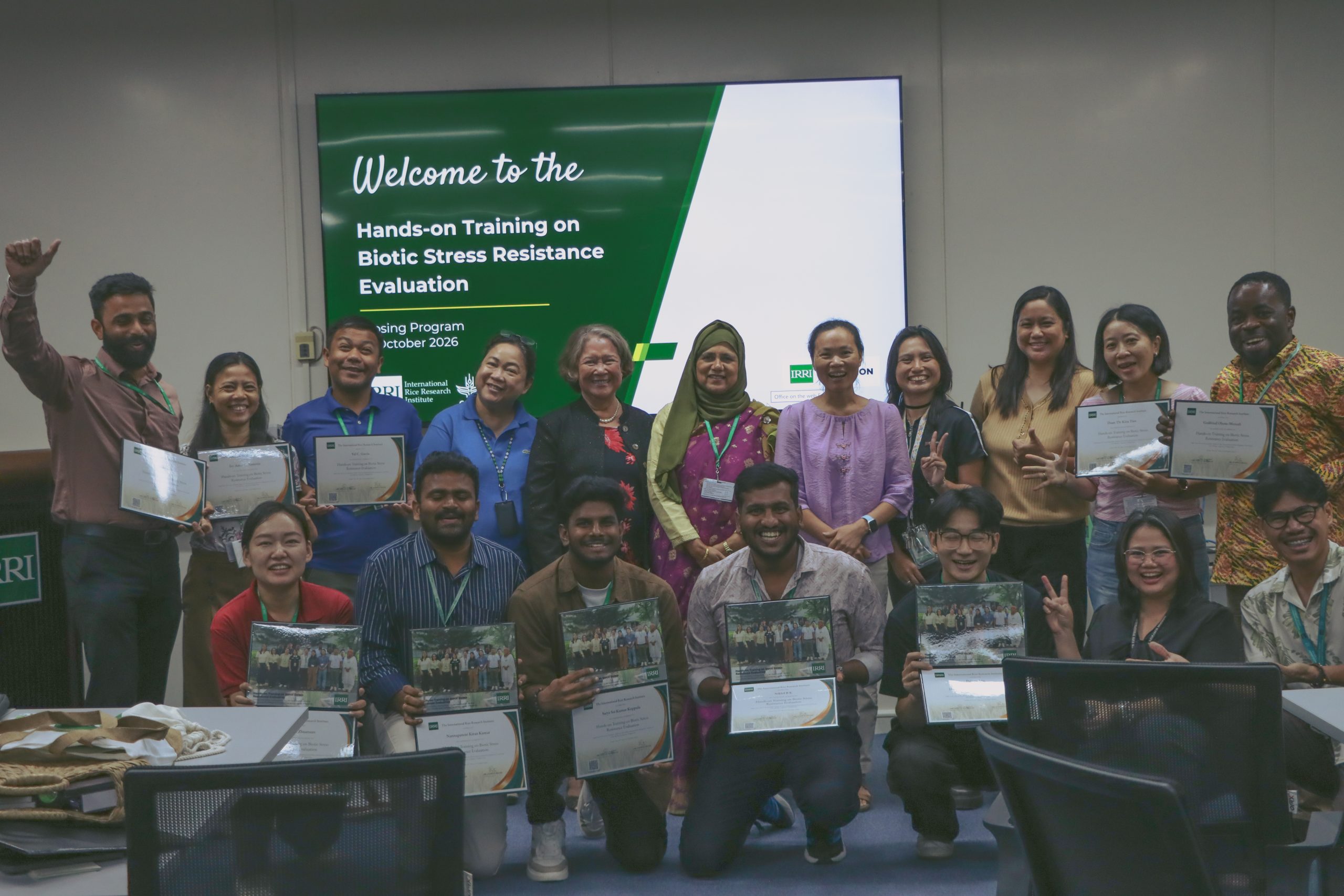
LOS BAÑOS, Philippines — As pests and diseases continue to threaten rice productivity, strengthening researchers’ ability to identify and evaluate biotic stress resistance is essential to developing more resilient rice varieties and effective pest management strategies. To build these capabilities, the International Rice Research Institute (IRRI), through IRRI Education and its Plant Pathology group led by Dr. Van Schepler-Luu, conducted the Hands-on Training on Biotic Stress Resistance Evaluation from October 5 to 16, 2026, at IRRI headquarters in Los Baños, Laguna, Philippines. 

The two-week course brought together 11 researchers, scientists, faculty members, research assistants, and doctoral scholars from rice research institutions in Asia and Africa. Through laboratory exercises, greenhouse activities, field observations, and guided discussions, participants developed practical skills in identifying, collecting, isolating, inoculating, and evaluating major rice pests and diseases. Beyond technical instruction, the training aimed to equip participants with standardized methods they could apply in their research, teaching, and extension work.
Turning scientific knowledge into practical expertise 

For researchers working to improve rice productivity, understanding pests and diseases is only the beginning. They must also be able to identify the organisms responsible, evaluate the damage they cause, and generate reliable evidence of a rice variety’s resistance. 

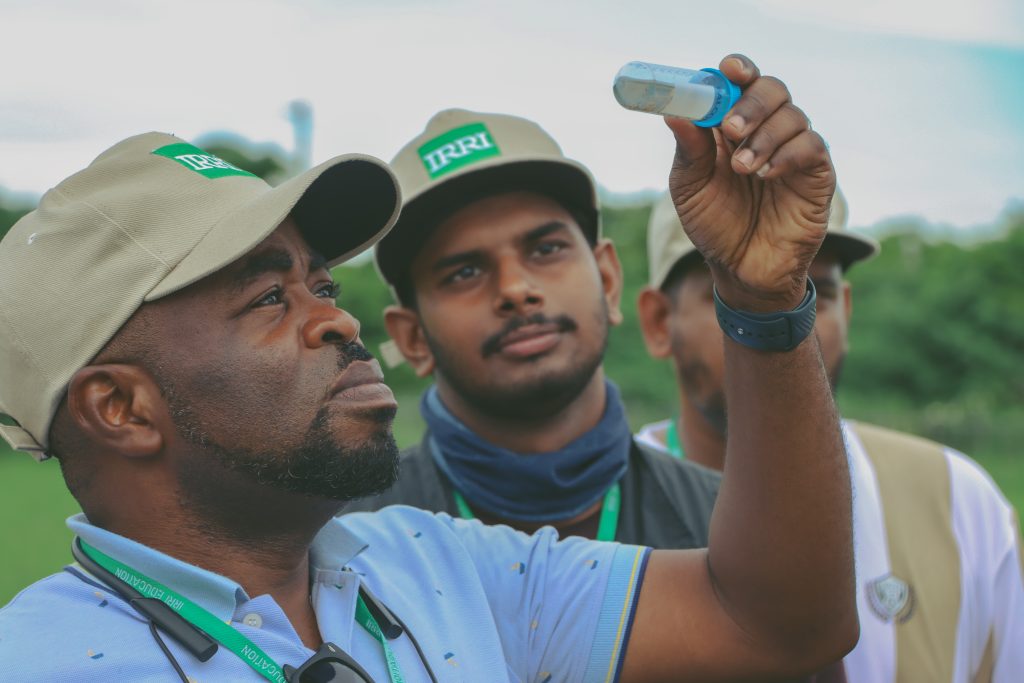
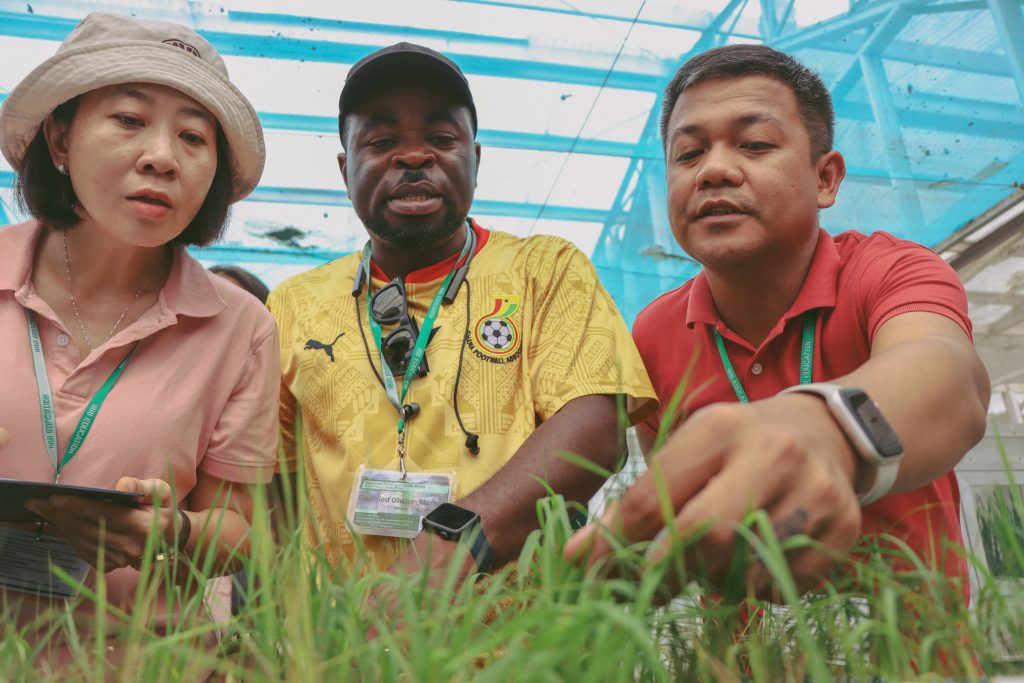
The training provided participants with opportunities to practice these skills firsthand. They collected diseased plant samples and insect pests, isolated and maintained fungal and bacterial pathogens, prepared cultures, and conducted artificial inoculation and infestation experiments. In laboratories and greenhouses, they evaluated major rice diseases—including blast, sheath blight, brown spot, false smut, and bacterial blight, bacterial leaf streak—as well as insect pests such as brown planthoppers, green leafhoppers, and yellow stemborers. They also explored molecular detection of tungro virus, methods for inoculation, and assessing resistance. 

For one participant from the Plant Breeding field, these exercises filled an important gap in their professional knowledge. Reflecting on their experience before attending the course, the participant shared: 

“As a researcher from the Genetics and Plant Breeding department, I had limited knowledge of rice diseases and insect pests before attending this programme.” 

The participant explained how the training helped build that foundation through practical work: 

“The training helped me understand disease symptoms, pathogen isolation and preservation, inoculation techniques, and disease and insect damage evaluation through practical sessions.” 

The learning has direct relevance to the participant’s research, particularly in identifying disease problems, understanding their effects on crop yield, and improving existing resistance-screening protocols. The participant added that the knowledge and skills gained would help “identify disease problems in my research, understand their effects on crop yield, and improve existing protocols for screening biotic stress resistance.” 

These experiences highlight the value of experiential learning in specialized scientific training. By practicing procedures rather than relying solely on classroom instruction, participants developed a clearer understanding of how resistance evaluation works and how its results can inform rice research. 

Taking research beyond the greenhouse 

The practical activities also helped participants connect controlled experiments with the challenges faced by farmers. During a field visit, they observed biotic stressors in rice fields, collected diseased plants and analyzed their observations. The activity encouraged participants to consider how scientific assessments relate to actual production conditions. 

For a participant from Central Luzon State University (CLSU), this connection became an important part of the training’s professional impact. The participant described the learning experience as an opportunity to follow the evaluation process from the field to the laboratory and back to its application in research. 

Reflecting on the two weeks, the participant wrote: 

“Following a problem from the field to the culture plate to a resistance score gave me a complete, reproducible workflow.” 

The experience strengthened the participant’s understanding of how field observations, laboratory procedures, and resistance scoring contribute to a systematic assessment of biotic stress. The participant also emphasized how the course influenced their approach to screening, noting that “the emphasis on consistency in every inoculation changed how I think about screening.” 

Such consistency is important in resistance evaluation, where standardized procedures help researchers produce results that can be compared, reproduced, and used to inform breeding decisions. Learning to carry out each step carefully can help researchers strengthen the reliability of their assessments and improve the quality of evidence used in their work. 

Beyond the technical procedures, the participant also reflected on the realities of applying research in agricultural communities. Their planned next steps demonstrate how the training could translate into action: 

“I will apply these protocols in my work on integrated pest management in rice, for early detection, assessment of disease severity, and timely management, and I will share what I have learned with colleagues and students, in the hope of helping Filipino rice farmers.”


Carrying new skills into future research 

For a scientist at Chaudhary Charan Singh Haryana Agricultural University in India working with ICAR-AICRP Rice, the training provided practical knowledge that could be applied directly to his area of expertise in host plant resistance screening. 

In his testimonial, he described the program as a “transformative learning experience,” highlighting the immersive exposure across laboratories, greenhouses, and fields. He emphasized the value of learning standardized protocols for pathogen isolation, media preparation, artificial inoculation, and resistance scoring for major rice diseases and insect pests. 

The experience also expanded his professional connections. As he explained, “networking with fellow scientists from different countries and IRRI scientists from around the globe has opened up fantastic collaborative avenues.” 

Other participants similarly emphasized the value of the program’s hands-on approach, supportive resource persons, and opportunities to learn alongside researchers from different institutions. One participant described the training as a memorable professional experience, sharing: 

“I truly enjoyed the hands-on sessions, which helped me gain new skills, strengthen my understanding, and build confidence in applying these techniques to my research.” 

Another participant highlighted the course’s practical value for early-career specialists, describing it as “a very practical required course for every newly recruited Plant protectionist and students” and recommending it as a potential requirement for plant pathology certification. 

Together, these reflections point to the importance of combining technical instruction with opportunities to practice, exchange knowledge, and develop professional relationships. The participants’ experiences also reinforce the need to make specialized training accessible to researchers and students who will carry these methods into their institutions and research programs. 

To support continued learning and knowledge sharing, the IRRI Plant Pathology team led by Dr. Van Schepler-Luu published a training manual in 2026 to facilitate learning and share established practices in biotic stress resistance evaluation. The resource is available through Zenodo. 

First implemented in 2024, the course forms part of IRRI’s continuing efforts to strengthen scientific capacity in rice research. Through the collaboration of IRRI Education and its Plant Pathology and Entomology goups, the program provides researchers with practical learning opportunities that can be carried forward into their respective institutions. 

As the 11 participants conclude the two-week training, their takeaways extend beyond the techniques practiced in laboratories and greenhouses. Their plans to improve research protocols, monitor fields, train colleagues, and collaborate with other institutions demonstrate how new knowledge can become part of ongoing scientific work.

Interested in similar training opportunities? Visit education.irri.org to learn more or email us at irri-education@cgiar.org.

agricultural development capacity building IRRI training
2
Measuring emissions, advancing climate action: IRRI trains rice-sector professionals in GHG measurementPrevious Post

SIGN UP FOR NEWSLETTER

Receive our latest updates

/* real people should not fill this in and expect good things - do not remove this or risk form bot signups */

CONTACTS

IRRI HQ Location:
Los Baños, Laguna 4031, Philippines
Phone: +63 2 8580 5600, +63 2 8845 0563;
ISARC Office Location:
NSRTC Campus, G. T. Road, Collectry Farm, P.O. Industrial Estate, Varanasi-221006, Uttar Pradesh, India
Phone: +91-0542-2518901, +91-0542-2518900
Email: irri-education@cgiar.org

KNOWLEDGE HUBS

IRRI
CGIAR
Openlearning
Rice Knowledge Bank
CGIAR’s Gender, Diversity and Inclusion Knowledge Hub

QUICK LINKS

  • About Us
  • News & Events
  • Guestbook
  • FAQs
  • Institutional CapDev Facilities

Engage with Us


IRRI-CGIAR logo

Privacy & CookiesLegal NoticeCreative Commons© 2022 IRRI Education. All Rights Reserved

  • Login
Forgot Password?
Lost your password? Please enter your username or email address. You will receive a link to create a new password via email.
Please enter a new password
body::-webkit-scrollbar { width: 7px; } body::-webkit-scrollbar-track { border-radius: 10px; background: #f0f0f0; } body::-webkit-scrollbar-thumb { border-radius: 50px; background: #dfdbdb }

    We would like to hear from you!