

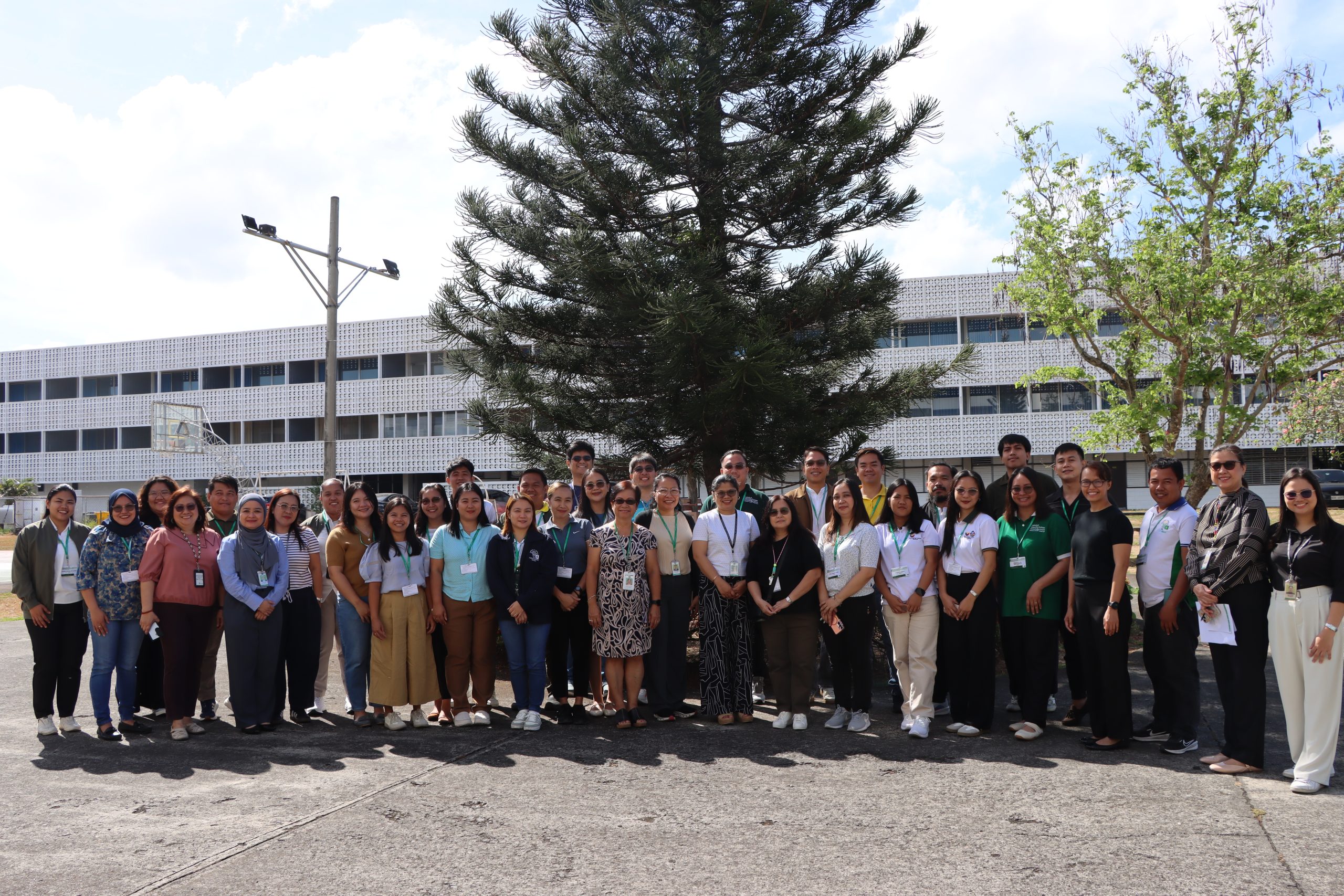
LOS BAÑOS, Laguna, Philippines — 25 staff from the regional centers of the Department of Agriculture – Agricultural Training Institute (DA-ATI) successfully completed the Integrated Pest Management (IPM) Training Course held on 4–8 May 2026 at the International Rice Research Institute (IRRI) in Los Baños, Laguna.
The five-day course strengthened participants’ knowledge and practical skills in ecological, climate-smart, and sustainable pest management strategies for rice-based systems.
Integrated Pest Management (IPM) is widely recognized as an economically and ecologically sound approach that helps farmers improve productivity while minimizing harmful effects on human health and the environment. Through this training, led by Dr. Nurmi Pangesti, Scientist II – Entomology and Country Representative –Cambodia, participants were introduced to recent paradigm shifts in rice pest management, updates in pest management technologies, and strategies for designing localized IPM learning action plans.
Unlike traditional classroom-based training, the course emphasized experiential learning through field-based and participatory activities. Participants engaged in lectures, laboratory sessions, hands-on fieldwork, bus stop practical exercises, and community immersion activities that allowed them to directly observe and identify live insect pests, diseased rice plants, weeds, and other field concerns.
Throughout the training, participants learned from IRRI scientists, researchers, and partner experts from different DA agencies specializing in entomology, plant pathology, weed science, digital agriculture, geospatial science, agronomy, and innovation systems.
Key modules covered during the course included:
- Introduction to IPM ecology, concepts, and principles
- Identification and management of rice insect pests, diseases, and weeds
- Management of rodents, golden apple snails, and birds
- Digital agriculture and precision farming tools
- Pest Risk Identification and Management (PRIME)
- Farmer Field School and participatory techno-demonstration design
- Participatory Community Appraisal (PCA) and learning action planning
A highlight of the course was the field visit to Sta. Cruz, Laguna, where participants interviewed farmers, and conducted participatory appraisal activities to better understand on-the-ground pest management challenges and farmer decision-making.
 Participants also took part in practical “bus stop” exercises—interactive stations featuring real pest specimens, disease symptoms, and weed samples—which tested and strengthened their diagnostic and identification skills.
One participant shared:
“I really appreciate the hands-on activities included in this training. I can now confidently identify insect pests and diseases which I had only seen in pictures before.”
Another participant reflected on the value of the training for extension work:
“The training was very intensive and very helpful. Through this five-day training, I was able to properly identify natural enemies and insect pests, diseases based on lesions and symptoms, and became more familiar with weeds in rice fields. Truly, this training enhanced my skills.”
Participants likewise highlighted the relevance of the course to their work in agricultural extension.
“It was informative and relevant to rice production and extension work. The combination of lectures, discussions, field activities, and hands-on exercises strengthened both understanding and practical skills.”
Representing various ATI Regional Training Centers across the Philippines, participants included rice coordinators, agriculturists, development management officers, training specialists, technical support staff, and program focal persons who directly support farmers and agricultural communities nationwide.
 By the end of the training, participants developed context-specific Learning Action Plan including the different tools discussed in the course; Farmer Field School session plans, techno-demonstration concepts, and Participatory Community Appraisal tools that they can implement in their respective regions.
From identifying pests in the field to co-creating solutions with farmers, the training demonstrated that effective pest management goes beyond theory—it requires action, collaboration, and continuous learning. As participants return to their respective regions, they carry with them the knowledge, tools, and confidence to champion Integrated Pest Management and support Filipino farmers in protecting their crops, livelihoods, and communities.